
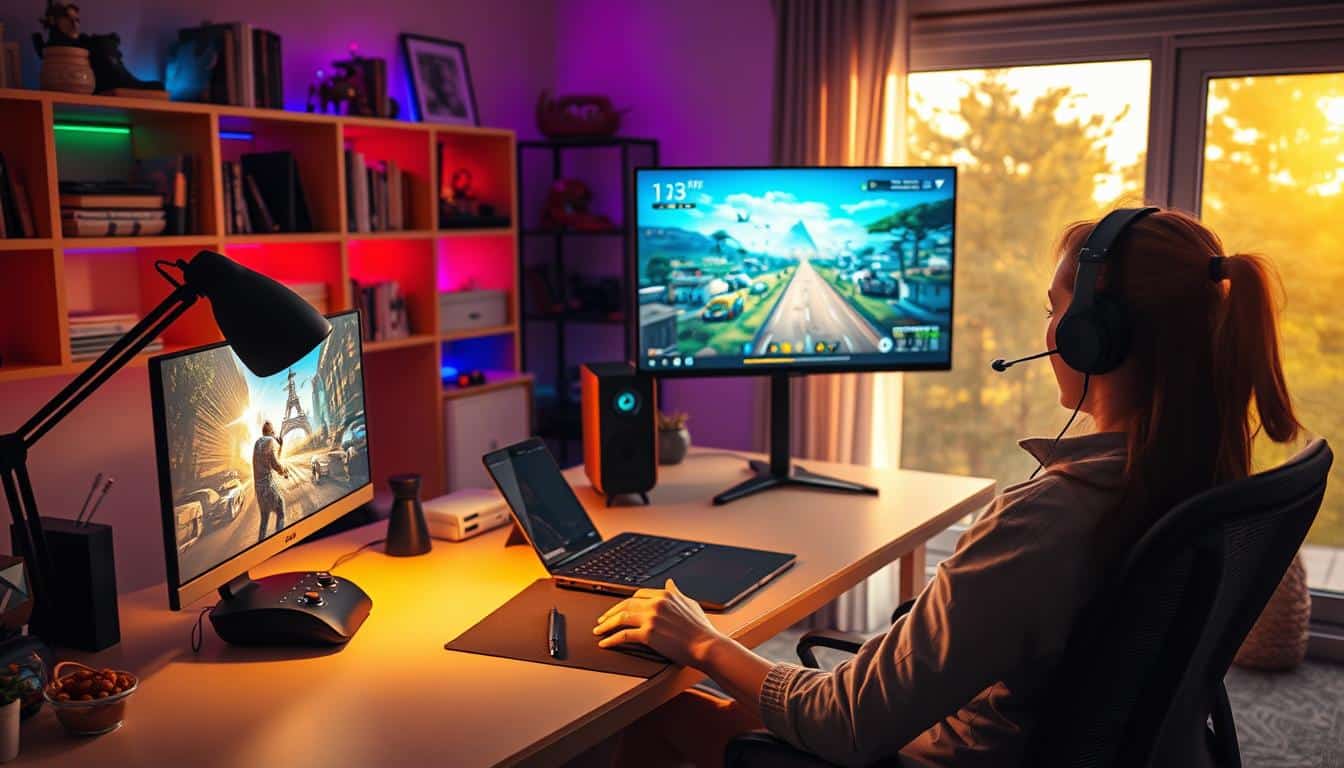

The global gaming industry just hit $184 billion in revenue. Most people don’t know that ordinary gamers are claiming their share of that money without spending anything upfront. Three years ago, my friend mentioned earning $500 monthly just testing mobile games during lunch breaks.
I was skeptical. Really skeptical.
You’ve probably seen those “make money playing games” ads that seem too good to be true. After digging deeper, I discovered legitimate work from home gaming opportunities that actually deliver. No pyramid schemes, no purchasing “starter kits,” no nonsense.
This guide walks through the real methods that work. Game testing programs, streaming platforms, competitive tournaments, and content creation all pay actual money. I’ll share what I’ve learned through trial and error.
You’ll discover which platforms waste your time and which ones deserve your attention. This isn’t about getting rich overnight. It’s about turning your gaming skills into genuine income while doing something you already enjoy.
Key Takeaways
- Multiple legitimate platforms exist where you can earn money through gaming without any upfront investment
- Game testing, streaming, competitive play, and content creation represent the most viable income paths for home gamers
- Earnings vary significantly based on your commitment level, ranging from modest side income to full-time potential
- Success requires treating gaming opportunities as actual work, not just extended play sessions
- Building consistent income takes time—most successful earners report 3-6 months before seeing substantial returns
- Combining multiple income streams (testing plus streaming, for example) maximizes earning potential
Understanding the Concept of Paid Gaming
Gaming for money isn’t what most people think it is. Understanding the distinction matters if you’re serious about turning playtime into paytime. The concept has evolved beyond simple prize tournaments into complex revenue streams.
Before diving into specific methods, grasp the fundamental difference between direct payment models and indirect monetization strategies. This distinction shapes your entire approach to earning through gaming.
What Does “Get Paid to Play Video Games” Mean?
The phrase “get paid to play video games” covers a surprisingly wide range of activities. You’re not simply loading up your favorite game and expecting checks to arrive. Streaming comes somewhat close to that ideal.
Direct payment methods involve receiving money specifically for your gaming activities. These include competitive tournament prizes, game testing contracts, and paid coaching sessions. A Fortnite tournament win or testing agreement with a developer means direct compensation.
Indirect monetization works differently. You build an audience or create content around gaming, then earn through secondary channels. This includes ad revenue from YouTube videos, sponsorship deals on Twitch streams, and affiliate commissions.
Most successful gamers combine both approaches. A professional streamer might earn tournament prizes and collect sponsorship money simultaneously. If you’re exploring free ways to make money gaming, start with indirect methods since they require less upfront skill investment.
- Competition winnings: Prize pools from tournaments and ranked competitions
- Content monetization: Ad revenue and subscriptions from platforms like YouTube and Twitch
- Sponsorships: Brand deals and promotional partnerships
- Game testing: Paid positions evaluating pre-release games
- Coaching services: Teaching skills to other players for fees
- Affiliate marketing: Commissions from gaming product recommendations
The key misconception is people thinking they’ll get paid just for playing casually. That’s not how this works. Every monetization method requires either exceptional skill, audience building, or specialized knowledge.
The Rise of the Gaming Industry
Understanding why paid gaming opportunities exist requires looking at the industry’s explosive growth. The gaming sector transformed from a niche hobby into a cultural and economic powerhouse. It now rivals traditional entertainment.
The numbers tell a compelling story. Global gaming revenue surpassed $180 billion in recent years, exceeding movie and music industries combined. This isn’t just about console sales anymore.
Mobile gaming, esports, and streaming have created entirely new markets. Professional gamer once sounded like a joke career choice. Now esports tournaments fill stadiums and offer prize pools exceeding $30 million for single events.
The International Dota 2 Championship routinely breaks records. Games like League of Legends maintain viewership that competes with traditional sports broadcasts.
This growth created legitimate business needs that translate into paid opportunities for gamers. Game developers need testers. Streaming platforms need content creators. Esports organizations need competitive players.
Twitch launched in 2011 and initially seemed like a curiosity. Who would watch other people play games? Turns out, millions would. That platform alone has distributed billions in revenue to content creators.
Mobile gaming’s explosion added another dimension. Smartphones in nearly every pocket brought gaming to new audiences. This expansion created demand for mobile game testers and content creators specializing in mobile titles.
The legitimization of gaming as entertainment also matters. Universities now offer esports scholarships. Major brands sponsor gaming events. Investment firms pour capital into gaming startups.
This mainstream acceptance opened funding sources that didn’t exist a decade ago. More paid positions exist throughout the ecosystem. The barrier to entry has never been lower, even as the potential ceiling has never been higher.
The gaming industry’s trajectory shows no signs of slowing. Virtual reality, cloud gaming, and blockchain-based games represent new frontiers with additional monetization possibilities. Each technological advancement creates fresh opportunities for gamers willing to adapt.
Benefits of Playing Video Games for Money
Pursuing paid gaming offers benefits I didn’t expect. Extra income caught my attention first. But the real value goes beyond money.
You build skills that help in life and work. The gaming industry is now a legitimate space. Dedication actually pays off here.
Financial Opportunities
Let me be straight about the money part. The income spectrum is incredibly wide. Your earnings depend on commitment and chosen approach.
Casual gamers earn $50 to $100 monthly. They join paid tournaments or complete tasks. That’s beer money, not rent money.
Treat this seriously and the numbers change. Streamers with consistent audiences earn $500 to $2,000 monthly. They build their community first.
Professional esports competitors earn even more. Top-tier content creators make six figures annually. I’ve seen people start from scratch and succeed.
Find legitimate gaming income sites that actually pay. Established names like Twitch work for streaming. Players’ Lounge offers competitive gaming opportunities.
PlaytestCloud provides game testing jobs. These aren’t get-rich-quick schemes. They’re real businesses that pay gamers.
The variety of income streams surprised me most. You’re not limited to one approach. Successful gamers combine multiple methods.
- Tournament winnings from competitive play
- Subscription revenue from streaming platforms
- Testing fees from game development companies
- Sponsorship deals with gaming brands
- Affiliate commissions from product recommendations
Here’s the financial reality. You’ll probably earn little for the first months. That’s normal.
Building gaming income requires patience. It’s like starting any side business. But once established, the earning potential becomes viable.
Skill Development
This benefit matters more than money long-term. Gaming as income forces you to develop valuable skills. These skills have real-world market value.
I thought I’d just play games. Instead, I built skills that helped me professionally. The benefits exceeded my expectations.
Technical abilities come first. You learn video editing for professional content. Audio mixing matters because sound quality affects viewership.
Social media management builds your audience. I learned OBS Studio and Adobe Premiere basics. Gaming income demanded these skills.
Professional skills develop naturally too. Consistency becomes essential for audience growth. You can’t stream randomly and expect results.
Deadlines matter with sponsors and developers. Communication skills improve through constant viewer engagement. You interact with gamers and partners regularly.
Business skills surprised me completely. Self-promotion becomes necessary but shouldn’t feel pushy. Negotiation matters for sponsorship terms.
Financial management becomes critical. Track earnings and understand tax implications. Budget for equipment upgrades or struggle unnecessarily.
These capabilities transfer to traditional employment. Video editing skills work across industries. Community building and social media expertise are valuable.
Companies pay well for these abilities. Project management and content delivery build resumes. These skills open multiple doors.
You start this for money, genuinely. But you stay for the competence gained. Income validates your effort initially.
The skill development provides lasting value beyond gaming. Nobody tells you this upfront. It’s what makes this journey truly worthwhile.
Popular Platforms to Get Paid
Real money gaming platforms have grown significantly in recent years. They create accessible entry points for competitive players and casual gamers alike. These platforms have evolved from sketchy websites to legitimate businesses with proper payment structures.
The variety of monetization models available today is impressive. Some platforms focus on skill-based competitions. Others reward consistency and audience building.
Understanding these differences helps you choose the right path. Your choice should match your strengths and time commitment.
Online Competitions and Tournaments
Competitive gaming platforms offer direct ways to play games for cash rewards. Skillz operates as a mobile-focused tournament platform. You can compete in games like Solitaire Cube, Blackout Bingo, and various puzzle games.
The entry barriers are relatively low. You’re often matched against players of similar skill levels. This keeps things fair for beginners.
Skillz tournaments typically charge small entry fees ranging from $0.60 to $60. Winners take home prizes based on the pool size. The platform takes a percentage, but the structure remains transparent.
You don’t need professional-level skills to participate. Just decent competency in your chosen game will work.
GamerSaloon takes a different approach. It focuses on console and PC competitive gaming. Popular titles include Call of Duty, FIFA, Madden, and NBA 2K.
This platform connects you directly with other players. You compete in head-to-head matches with real money on the line. The competition here tends to be fiercer than casual mobile gaming.
Here’s what you should know about tournament-based platforms:
- Entry requirements vary significantly: Mobile puzzle games need basic skills, while esports titles demand hundreds of practice hours
- Payment processing takes time: Most platforms hold funds for 24-72 hours to verify match results and prevent fraud
- Bankroll management matters: Starting with small entry fees helps you learn platform mechanics without risking significant money
- Game selection impacts earnings: Popular titles have larger prize pools but also attract more skilled competition
Esports tournament sites like Challengermode and Battlefy organize larger-scale competitions. These platforms offer substantial prize pools. They cater to serious competitive players who participate in organized leagues.
These platforms require more time investment. However, they offer significantly higher earning potential for skilled players.
Beginners will probably lose more matches than they win initially. That’s completely normal. Players who consistently earn money have invested months developing their skills.
Think of entry fees as tuition. You’re paying to learn while occasionally winning enough to offset costs.
Streaming Services like Twitch
Streaming represents one of the most accessible online video game jobs no experience required. Anyone can create an account and start broadcasting today. Twitch has become the dominant platform in this space.
Over 7 million active streamers use Twitch. Viewers watch billions of hours monthly. The barrier to entry exists in building an audience, not in technical qualifications.
Small streamers can grow their channels from zero to sustainable income sources. The mega-streamers with millions of followers started with zero viewers. The difference was consistency and genuine engagement with their early community members.
Twitch’s monetization structure works through multiple revenue streams:
- Affiliate Program: Reach 50 followers and 500 total minutes broadcast to unlock subscriptions and bit donations
- Partner Program: Achieve 75 average viewers to access higher revenue splits and additional features
- Subscriptions: Viewers pay $4.99, $9.99, or $24.99 monthly, with streamers receiving approximately 50% of subscription revenue
- Bits: Virtual currency viewers purchase and use to cheer in chat, with streamers earning $0.01 per bit
- Ad revenue: Display ads during streams, earning based on viewer count and ad frequency
The financial reality of streaming requires patience. Most new streamers earn nothing for their first 3-6 months. Those who reach Affiliate status might earn $50-200 monthly initially.
Partners with dedicated communities can generate $2,000-10,000+ monthly. However, that represents years of consistent effort.
YouTube Gaming offers an alternative streaming platform with slightly different mechanics. The advantage here is discoverability. YouTube’s algorithm can surface your content to new viewers through recommendations.
Twitch relies more heavily on live directory browsing. This makes it harder for new streamers to get noticed initially.
Treating streaming as online video game jobs no experience means your qualifications develop in real-time. You learn broadcasting software, audience engagement, and content planning by actually doing them. There’s no resume requirement or interview process.
Realistic expectations matter tremendously here. The top 1% of streamers earn life-changing money. However, the median streamer makes essentially nothing.
Success requires treating streaming like a legitimate business. This includes a consistent schedule, content strategy, and community engagement. Talented gamers fail when they stream sporadically.
Less-skilled players build sustainable income through reliability and genuine connection with viewers.
Starting points for aspiring streamers should focus on fundamentals first. Choose games you genuinely enjoy playing for hours. Authenticity shows through the camera.
Invest in decent audio equipment before worrying about high-end cameras. Viewers tolerate mediocre video quality but abandon streams with poor audio instantly. Show up consistently on a schedule your initial viewers can rely on.
Both competitive platforms and streaming services offer legitimate paths to earning money. These platforms work for thousands of people. The real question is whether you’re willing to invest the time.
You must handle the inevitable slow start. Persist through the months when earnings don’t match effort invested.
Game Testing Opportunities
Game testing shattered my romanticized notions about getting paid to play. However, it opened legitimate earning opportunities I hadn’t considered. Most people think game testers just play games all day and collect paychecks.
The reality involves methodical bug hunting, detailed reporting, and repetitive gameplay that tests your patience. It challenges your gaming skills in unexpected ways. This work requires dedication and focus.
If you’re looking to earn money testing games remotely, this field offers accessible entry points. You don’t need a computer science degree or professional gaming credentials. What you need is attention to detail and willingness to replay levels.
The misconception that testing is just “free gaming” keeps many people from taking it seriously. That’s actually good news for those who understand what the job entails.
How Game Testing Works
Game testing splits into two distinct categories that require different skill sets. Quality Assurance (QA) testing focuses on the technical side—finding bugs, glitches, crashes, and performance issues. QA testers follow detailed test plans and document everything meticulously.
Playtesting centers on player experience and feedback. Playtesters evaluate game mechanics, difficulty curves, user interface design, and overall enjoyment. Companies use video game playtesting opportunities to gather data before official releases.
Here’s what typical game testing involves:
- Following test plans: You’ll receive specific scenarios to test, not random gameplay
- Bug documentation: Screenshots, video captures, and detailed written reports are mandatory
- Repetitive tasks: Testing the same feature dozens of times under different conditions
- Communication: Regular feedback sessions and written reports to development teams
- Time constraints: Meeting deadlines during crucial development phases
Remote testing platforms like Playtestcloud pay testers to play mobile games for 15-20 minutes. They record their screen and voice during gameplay. BetaFamily connects testers with iOS and Android game developers.
UserTesting offers broader digital product testing that includes games.
I remember testing an indie puzzle game where I spent three hours trying something specific. I attempted to make the character clip through a particular wall. Not glamorous, but that repetitive testing caught a game-breaking exploit before launch.
That’s when I truly appreciated the complexity of game development. Every smooth gaming experience represents hundreds of hours of testing work.
Requirements for Becoming a Game Tester
The barrier to entry for video game beta tester positions is surprisingly low. Success requires specific qualities. You don’t need formal education or certification to start.
What matters more is your approach and reliability.
Essential skills and attributes include:
- Attention to detail: Spotting visual glitches, audio bugs, and inconsistencies others might miss
- Clear communication: Writing coherent bug reports that developers can actually use
- Patience and persistence: Tolerating repetitive tasks without losing focus
- Technical competence: Understanding basic gaming terminology and concepts
- Reliable equipment: Stable internet connection, functioning computer or console, recording capability
Your equipment doesn’t need to be high-end for most remote positions. A decent computer that runs modern games covers the basics. Reliable internet and basic recording software are also essential.
Some platforms provide specific testing devices or software.
Finding legitimate video game playtesting opportunities requires knowing where to look. Official game company websites often post testing positions directly—check the careers sections of studios you admire. Specialized platforms like BetaBound, Global Beta Test Network, and VMC Game Labs connect testers with developers.
Here’s how to avoid scams in the testing space:
- Legitimate companies never charge fees to become a tester
- Real testing gigs provide clear payment terms upfront
- Professional platforms use secure payment systems, not wire transfers or gift cards
- Authentic opportunities include detailed job descriptions and requirements
- Established companies have verifiable online presence and reviews
Starting rates for remote game testing typically range from $10 to $20 per hour. Pay depends on the platform and your experience level. Specialized QA positions with game studios can pay significantly more.
The path to consistent income through testing builds gradually. You’ll start with short playtesting sessions through platforms like Playtestcloud. As you build reputation and experience, longer-term contracts become accessible.
Higher-paying video game beta tester positions open up with time.
This isn’t passive income or easy money—it’s actual work that demands focus. It requires professionalism. But if you’re detail-oriented and genuinely interested in how games function, testing provides opportunities.
You can earn money testing games remotely while contributing to better gaming experiences.
Earning Through Content Creation
I’ve watched friends record their first gaming video on a phone and monetize within six months. This proves equipment isn’t the roadblock most people imagine. Content creation represents one of the most accessible paths to earning from gaming.
You’re building something that generates income while you sleep. Unlike live streaming where you trade time for money, recorded content works for you repeatedly.
This approach offers genuine online video game jobs no experience needed to start. You don’t need a degree in video production or expensive cameras. You need consistency, a willingness to improve, and something interesting to share.
YouTube and Gaming Content
YouTube remains the dominant platform for gaming content creators. The variety of content types means you can find your niche without copying everyone else. Main formats that gain traction include let’s plays, tutorials, game reviews, and highlight montages.
Here’s what nobody tells you upfront about gaming content monetization. YouTube’s Partner Program requires 1,000 subscribers and 4,000 watch hours in the past 12 months. That sounds intimidating until you break it down.
Four thousand hours equals roughly 11 hours of watch time daily. This means about 30-40 people watching 20-minute videos each day.
Most consistent creators reach monetization in 6-12 months with 2-3 weekly posts. I’ve seen gaming channels hit requirements in three months with viral content. Others take two years with slower growth.
The Partner Program isn’t your only revenue stream. Once you establish an audience, you can earn through channel memberships and Super Chat. These additional income sources often exceed ad revenue for smaller channels.
Utilizing Social Media for Engagement
Social media isn’t just for promoting your YouTube videos. It’s where you build the community that supports everything else. TikTok has become essential for gaming creators with short clips driving massive traffic.
Instagram serves a different purpose in the gaming ecosystem. It’s your behind-the-scenes platform where followers see your setup and get updates. The visual format works perfectly for showcasing gaming setups and sharing memes.
Twitter remains valuable for networking with other creators and game developers. This platform opens collaboration opportunities and keeps you visible in gaming conversations. The key is authenticity—people detect promotional spam instantly.
These platforms amplify your reach beyond any single channel. Someone discovers you on TikTok, follows you on Instagram, then subscribes to YouTube. This multi-platform approach creates multiple entry points for audience growth.
Social media engagement isn’t extra work—it’s how modern content creation functions. Every platform feeds the others, creating an ecosystem. Your gaming content reaches exponentially more people than YouTube alone could deliver.
Essential Tools You Actually Need
Let’s address the tools question directly. Confusion about equipment stops more aspiring creators than anything else. You don’t need to spend thousands.
| Tool Category | Recommended Software | Cost | Best For | Learning Curve |
|---|---|---|---|---|
| Screen Recording | OBS Studio | Free | Gameplay capture and live streaming | Moderate (2-3 hours to basic competency) |
| Video Editing | DaVinci Resolve | Free (Pro version $295) | Professional editing without subscription | Steep initially, manageable with tutorials |
| Thumbnail Creation | Canva | Free (Pro $13/month) | Eye-catching thumbnails that drive clicks | Easy (30 minutes to first thumbnail) |
| Audio Enhancement | Audacity | Free | Cleaning up microphone audio | Low (basic functions intuitive) |
These free tools handle everything you need for gaming content monetization. I’m not suggesting they’re simple—DaVinci Resolve has a genuine learning curve. But they’re completely capable of professional results.
Your first videos will probably be rough. Mine were terrible. But that imperfection doesn’t matter because you’re building skills while building an audience.
Start with what you have—even if that’s just built-in screen recording. Create consistently, study what works for channels you admire, and upgrade tools as you grow. The equipment follows the audience, not the other way around.
Ways to Monetize Your Gaming Skills
Your gaming skills have value. Extracting that value means navigating sponsorships, affiliate partnerships, and merchandise opportunities with realistic expectations. Monetization doesn’t happen overnight—it builds in layers as your audience grows.
Most guides skip this reality: You won’t land major gaming sponsorships with 500 followers. But you can start monetizing earlier through other channels. These channels don’t require massive reach.
Sponsored Content and Affiliate Marketing
Sponsored content represents the dream for many gamers. Brands pay you to play games and promote products. This typically becomes viable after you’ve built an engaged audience of several thousand followers.
Legitimate gaming income sites like Matchmade and PowerSpike connect creators with brands. These platforms vet both sides, protecting you from sketchy deals. Matchmade works well for YouTube creators, while PowerSpike focuses on Twitch streamers.
Here’s what matters for landing your first sponsorship deal:
- Engagement rates matter more than follower counts — brands look at comments, shares, and viewer retention
- Niche audiences command better rates — 3,000 engaged fighting game fans beats 10,000 casual viewers
- Authenticity protects your brand — only promote products you’d actually use or recommend
- Media kits open doors — create a simple one-page document showing your stats and audience demographics
Affiliate marketing for gamers offers an earlier entry point. It doesn’t require thousands of followers. I started with affiliate links when I had barely 500 YouTube subscribers.
The approach works because you’re recommending products people actively search for anyway. Amazon Associates remains the easiest starting point. Commission rates hover around 1-4% for gaming products.
Game-specific affiliate programs often pay better. Steam’s curator program, Epic Games’ Support-A-Creator, and individual game publisher programs offer higher rates. Gaming hardware companies like Razer, Corsair, and Logitech run affiliate programs with 5-10% commission rates.
What actually converts in affiliate marketing for gamers? Equipment recommendations during setup tours work well. Game links in review descriptions and software tools you demonstrate using also convert.
The best affiliate content solves a problem your audience already has. I don’t promote products—I share solutions I actually use, and the affiliate link is just there if someone wants the same solution.
Track your affiliate performance through platforms like Pretty Links or ThirstyAffiliates. These tools show which recommendations actually generate clicks and sales. You can refine your strategy based on real data rather than guesses.
Merchandise Sales
Merchandise represents another revenue stream. It works better once you’ve built community and brand identity. Print-on-demand services like Teespring, Redbubble, and Streamlabs Merch let you sell branded items.
These services require no upfront costs or inventory management. The advantage of print-on-demand is zero financial risk. You design items, they handle production and shipping.
You earn a margin on each sale. The disadvantage is lower profit margins compared to bulk ordering. Typical margins are $3-8 per item depending on pricing.
Here’s a practical approach to merchandise that actually works:
- Start with one or two signature designs — test what resonates before expanding your catalog
- Feature merch naturally in content — wear your designs on stream without making it a sales pitch
- Create inside-joke items — merchandise tied to community memes or catchphrases sells better than generic logos
- Price competitively but fairly — don’t underprice just to move volume; your community will pay reasonable rates
- Use limited releases to build demand — seasonal or event-specific items create urgency
Streamlabs Merch integrates directly with your Twitch channel. This makes it easy for viewers to browse without leaving the platform. Teespring offers more design flexibility and product variety.
Redbubble works well for artistic designs. It attracts buyers outside your existing audience through their marketplace.
The monetization strategies outlined here build on each other. Start with affiliate marketing because it’s accessible early. Add merchandise once you’ve developed recognizable branding and community.
Pursue gaming sponsorship opportunities when your engagement metrics make you attractive to brands. Each layer adds to your total income without requiring you to abandon previous revenue streams.
None of these monetization methods will make you rich overnight. But combined strategically and grown consistently, they create multiple income sources. That’s the realistic path from gaming hobbyist to someone who earns sustainable income.
Statistics on Gaming and Income
Understanding the financial reality of gaming is essential before you dive in. I’ve spent countless hours analyzing gaming industry revenue statistics. The data tells a compelling story about work from home gaming opportunities.
People often ask me about the legitimacy of making money through gaming. I point them straight to the market data. The statistics remove speculation and replace it with concrete evidence.
The Explosive Growth of Gaming Revenue
The global gaming market generated over $184 billion in revenue in 2023, according to Newzoo’s annual report. That figure surpasses the combined revenue of the movie and music industries. Gaming is no longer a fringe entertainment option.
Gaming industry revenue statistics show consistent year-over-year growth that outpaces most traditional sectors. The market expanded at a compound annual growth rate of approximately 8.7% from 2018 to 2023. Projections suggest the industry will exceed $250 billion by 2027.
Mobile gaming accounts for the largest segment, representing roughly 52% of total revenue. This shift created work from home gaming opportunities that didn’t exist a decade ago. Console and PC gaming each capture significant market shares, with console at 28% and PC at 20%.
The rise of cloud gaming platforms has accelerated accessibility. Geographic barriers have dissolved as streaming technology improves. Emerging markets in Asia and Latin America contribute increasingly to global revenue totals.
“The gaming industry has matured into a legitimate career path for skilled players, content creators, and technical professionals. What was once viewed as child’s play now represents a multi-billion dollar economy with diverse monetization models.”
What Gamers Actually Earn
Professional gamer earnings vary dramatically based on skill level, platform choice, and time investment. I want to provide realistic expectations rather than highlight only the success stories. Most people earning from gaming fall into modest income brackets.
Entry-level game testers typically earn between $10-15 per hour when starting out. This represents legitimate work from home gaming opportunities for beginners. The position requires attention to detail but doesn’t demand exceptional playing skill.
Small streamers on Twitch or YouTube Gaming usually generate $50-500 monthly during their first year. This income comes from a combination of ads, subscriptions, and occasional donations. Building an audience takes consistent effort and personality development.
Mid-tier content creators with established audiences earn approximately $1,000-5,000 per month. These individuals typically stream 20-30 hours weekly and maintain active social media presence. Professional gamer earnings at this level require treating gaming as a serious business.
Elite professional gamers competing in major tournaments earn substantially more. Top players in games like Dota 2, Fortnite, and League of Legends have career earnings exceeding $1 million. However, this represents less than 0.01% of people attempting professional gaming careers.
| Experience Level | Role Type | Monthly Income Range | Time Investment |
|---|---|---|---|
| Beginner | Game Tester | $800-$2,400 | Part-time (20 hrs/week) |
| Intermediate | Small Streamer | $200-$1,500 | Regular (15-25 hrs/week) |
| Advanced | Content Creator | $2,000-$8,000 | Full-time (30-40 hrs/week) |
| Professional | Tournament Player | $5,000-$50,000+ | Full-time plus (40-60 hrs/week) |
The Esports Earnings database tracks over $1.5 billion in tournament prize money distributed since 2000. This gaming industry revenue statistics snapshot shows concentrated earnings among top performers. The median tournament player earns far less than the headline-grabbing million-dollar prizes suggest.
Twitch data leaks from 2021 revealed that the top 10,000 streamers earned an average of $3,000-5,000 monthly from subscriptions alone. That doesn’t include sponsorships, donations, or merchandise sales. Professional gamer earnings become more substantial when multiple revenue streams converge.
Most people successfully earning from gaming generate between $100-1,000 monthly as supplemental income. This represents useful additional cash flow rather than career-replacing income. Setting realistic expectations prevents disappointment and helps maintain motivation.
The data shows that work from home gaming opportunities genuinely exist across multiple income tiers. Success correlates strongly with consistency, audience building, and business acumen. Gaming skill alone doesn’t guarantee financial success—you need marketing understanding and community engagement.
Tools and Resources for Gamers
I made a big mistake when I first started streaming. I thought I needed all the expensive equipment right away. The truth is, you can start with free software and gear you already own.
You can upgrade your setup later as you earn money. This smart approach saves you hundreds of dollars upfront.
The right gaming streaming software makes you look professional instead of amateur. Free options often work just as well as paid ones for beginners. Your content quality matters way more than expensive broadcasting software.
I’ve tested most of these tools personally while trying to earn money testing games remotely. Some exceeded my expectations, while others disappointed despite their high prices. Let me share what actually works in the real world.
Essential Software for Streaming and Recording
OBS Studio is my top recommendation for gaming streaming software because it’s completely free. I use it for every single stream. The learning curve takes about two hours of YouTube tutorials.
For game recording tools, you’ve got several solid options. Nvidia ShadowPlay works brilliantly if you have an Nvidia graphics card. Medal offers similar functionality across different hardware setups.
Streamlabs provides an alternative to OBS with built-in alerts and overlays. It’s slightly more user-friendly for complete beginners. XSplit is the paid option at around $15 monthly.
Communication tools matter more than people realize. Discord has become essential for building community and coordinating multiplayer sessions. Every successful gamer I know uses it daily.
Video editing separates good content from great content. DaVinci Resolve offers professional-grade editing completely free. Adobe Premiere Pro costs $20 monthly but adds workflow efficiency.
For thumbnails and graphics, Canva provides free templates that look professional enough. Photoshop offers more control at $10 monthly. Canva handles 90% of what most gaming creators need.
Best Equipment for Gaming Setup
Let me organize this by necessity. The biggest question is always “what do I actually need to start?” The answer might surprise you—probably less than you think.
| Equipment Tier | What You Need | Approximate Cost | When to Upgrade |
|---|---|---|---|
| Essential | Gaming PC or console, stable internet (10+ Mbps upload), basic microphone | $0-50 (assuming you own gaming device) | Start here immediately |
| Recommended | Webcam (Logitech C920), better microphone (Blue Yeti or similar), dual monitors | $200-400 total | After first earnings or 50 hours streaming |
| Luxury | Professional lighting setup, DSLR camera, Elgato Stream Deck, acoustic panels | $600-1500+ | When earning $500+ monthly consistently |
Your gaming PC or console is obviously essential—but you already own that. Stable internet matters more than speed, honestly. I’ve streamed successfully on 15 Mbps upload.
Microphone quality makes the single biggest difference in production value. A Fifine USB microphone costs $30 and sounds dramatically better than headset mics. The Blue Yeti at $100 represents the sweet spot.
Here’s my honest observation about diminishing returns. The difference between a $50 microphone and a $200 microphone matters significantly. Most viewers can’t tell the difference between $200 and $500.
Webcams remain optional for many gaming niches. Some successful streamers never show their face. If you want one, the Logitech C920 at $70 has been standard for years.
Dual monitors changed my workflow entirely—one for gaming, one for chat monitoring. You can find decent 1080p monitors for $100 each. This upgrade happened after my first month of streaming.
Lighting often gets ignored, but a $40 ring light makes webcam footage look professional. Professional streamers use three-point lighting setups costing $300+. That’s overkill until you’re earning serious money.
The Elgato Stream Deck costs $150 and provides programmable buttons for scene switching. It’s genuinely useful but absolutely not necessary. I streamed for six months before buying one.
You can definitely earn money testing games remotely with just a basic setup. Companies care about your feedback and testing skills, not your production value. Start with what you have.
My biggest mistake was buying too much too soon. I spent $600 on equipment before earning a single dollar. Start minimal, identify your actual bottlenecks through experience, then upgrade those specific pain points.
Frequently Asked Questions about Paid Gaming
I once sat at my computer, questioning if paid gaming was real or just internet fantasy. The skepticism makes sense because the idea sounds too good to be true. After years in this world, I’ve heard the same questions from people curious about earning through gaming.
Let me address the practical concerns that probably crossed your mind too.
Can You Really Make Money Playing Games?
Yes, absolutely, but you need to understand what you’re signing up for. The reality is more complex than simply “playing games for money.” Different methods pay differently, and the work extends beyond gaming sessions.
People ask about legitimate paid gaming opportunities, and I always stress that “playing” is just one part. Streamers spend hours editing content, managing communities, and promoting their channels. Game testers write detailed bug reports and repeat levels dozens of times.
Content creators invest significant time in thumbnail design, SEO optimization, and audience engagement.
- Game testing: Typically generates $50-300 monthly for 5-20 hours of weekly work
- Streaming: Requires 3-6 months of consistent effort before meaningful revenue appears
- Tournament play: Offers larger payouts but demands elite-level skills and intense competition
- Content creation: Builds gradually but can create sustainable long-term income
Here’s how to verify that opportunities to get paid to play video games at home for free are legitimate:
- Search for payment proof from real users on forums like Reddit or Discord communities
- Read detailed reviews on platforms like Trustpilot or gaming-specific review sites
- Avoid anything requiring upfront payment or promising unrealistic earnings
- Check if the company has verifiable contact information and transparent terms
- Look for established platforms with years of operation history
I’ve learned that scams typically promise quick riches with minimal effort. Legitimate opportunities clearly outline the work required and set realistic expectations.
How Much Time Should You Invest?
This question deserves an honest answer because time investment directly affects your earnings potential. The commitment varies significantly depending on which path you choose.
For game testing opportunities: Plan on dedicating 5-20 hours weekly. This isn’t casual playing—you’re systematically testing features and documenting issues. Companies typically assign specific testing windows, so flexibility matters.
For streaming success: Expect to invest 10-15 hours weekly for at least 3-6 months before seeing income. This includes actual streaming time, plus equipment setup, channel promotion, and community management. The initial months feel like shouting into the void, honestly.
For content creation: Budget 10-15 hours weekly including recording, editing, thumbnail creation, and social media promotion. A single 10-minute YouTube video might represent 3-4 hours of total work.
Let me emphasize something crucial: this isn’t passive income. Anyone promising easy money from get paid to play video games at home for free is misrepresenting reality. It’s real work that happens to involve gaming, with potentially flexible hours you control.
The good news? You can start small. Dedicate 5-10 hours weekly to explore different methods while maintaining your regular job. Test what resonates with you before committing fully.
Do you need to be amazing at games? Not necessarily, and this surprises most people. For streaming and content creation, personality and consistency often matter more than elite skills. Viewers connect with authentic, entertaining personalities.
I’ve seen mediocre players build substantial audiences through humor, teaching approaches, or unique perspectives.
Game testing actually benefits from average players who approach games like typical consumers. Testing companies need diverse skill levels to identify issues affecting their entire user base.
Can this become full-time income? Possible but rare, and you should approach it realistically. I’ve watched friends successfully transition to full-time gaming income after 18-24 months of building their foundation. The safer approach treats it as supplemental income initially.
Think of it as building a business that happens to involve gaming. Some businesses take off quickly; others require patient, consistent effort before reaching sustainability. The key is managing expectations while staying committed to the process.
Future Predictions for Paid Gaming
The path forward for gaming income holds remarkable potential for those willing to adapt. I’ve analyzed industry reports and watched trends develop over time. What I’m seeing suggests a fundamental shift in how gamers can monetize their skills.
The opportunities aren’t just growing—they’re diversifying in new ways. This creates openings for different player types and skill levels.
The gaming industry has reached a point where mainstream acceptance meets technological innovation. This convergence creates something special: multiple income streams that didn’t exist even five years ago.
The future is becoming more accessible rather than exclusive. The barriers to entry keep dropping as platforms compete. They want content creators and players on their side.
Trends in the Gaming Industry
Cloud gaming represents one of the most significant shifts I’m tracking for paid opportunities. Yes, Google Stadia failed spectacularly, but the concept hasn’t died—it’s evolved. Services like Xbox Cloud Gaming and NVIDIA GeForce NOW continue expanding.
This creates new testing and content creation opportunities. The cloud gaming market is projected to reach $8.17 billion by 2025. This growth means companies need more testers, more content creators, and more community managers than ever before.
Virtual reality and augmented reality gaming are finally moving beyond the hype phase. I’ve watched VR evolve from a gimmick to a legitimate platform. The income opportunities are expanding rapidly.
VR game testing pays particularly well because the skill set remains relatively rare. Companies struggle to find qualified testers who don’t get motion sickness.
Blockchain gaming and NFTs remain controversial, but they’re creating real income streams for early adopters. I’m cautious about this trend because the sustainability remains questionable. However, games like Axie Infinity demonstrated that play-to-earn models can work.
Mobile gaming continues its global domination, and this matters more than most people realize. The Entertainment Software Association reports that mobile gaming now represents 52% of all gaming revenue globally. Free ways to make money gaming are expanding fastest in the mobile sector because the player base is massive and diverse.
Mobile game testing offers particularly good opportunities for beginners. Companies need testers across different devices, operating systems, and geographic locations. You don’t need elite gaming skills—you need attention to detail and reliable feedback.
Artificial intelligence integration is creating entirely new categories of gaming content. AI-driven NPCs, procedurally generated content, and machine learning optimization need human testers. This trend will accelerate through 2025 and beyond, according to industry analysts I’ve consulted.
| Opportunity Category | Projected Growth (2024-2027) | Average Entry Time | Income Potential Range | Competition Level |
|---|---|---|---|---|
| Cloud Gaming Testing | 145% increase in positions | 1-2 months | $15-$35/hour | Moderate |
| VR/AR Content Creation | 230% market expansion | 3-6 months | $500-$5,000/month | Low to Moderate |
| Mobile Game Testing | 87% demand growth | 2-4 weeks | $12-$28/hour | High |
| Blockchain Gaming | Volatile, 60-180% fluctuation | 1-3 months | $200-$3,000/month | Moderate to High |
| AI-Assisted Testing | 310% projected increase | 2-4 months | $18-$42/hour | Low |
The Increasing Popularity of E-Sports
Competitive gaming’s trajectory is where esports growth predictions get really interesting. I’ve watched this sector transform from basement tournaments to Madison Square Garden events. The momentum shows no signs of slowing.
Newzoo’s latest esports market report projects global esports viewership will reach 640 million by 2025. Revenues will exceed $1.8 billion. That’s not just impressive—it’s transformative for income opportunities.
The prize pools continue growing exponentially. Dota 2’s The International surpassed $40 million in total prizes.
But here’s what most people miss: the real opportunity isn’t just for elite players. The ecosystem creates jobs for analysts, coaches, content creators, tournament organizers, and community managers. I’ve spoken with several people earning full-time incomes from esports without ever competing professionally.
The regional expansion of esports matters tremendously for accessibility. While North America and Europe dominated early growth, Asia-Pacific now represents 57% of global esports revenue. This geographic spread means more tournaments, more local opportunities, and more diverse paths to income.
College esports programs are exploding across the United States. Over 170 institutions now offer scholarships and organized teams. This legitimization creates coaching opportunities, content creation niches, and training program development roles.
The future of gaming income increasingly includes traditional career paths within the competitive gaming structure. Mobile esports deserve special attention because they’re growing faster than PC or console competitive gaming. Games like PUBG Mobile and Mobile Legends generate massive tournament ecosystems with surprisingly accessible entry points.
You don’t need a $2,000 gaming PC to compete—just a decent smartphone and dedication. The democratization of esports broadcasting tools means anyone can cast or analyze matches professionally. I’ve watched streamers build six-figure incomes by focusing on esports analysis and commentary rather than personal gameplay.
The esports industry is not just about the players anymore. For every professional gamer, there are dozens of people building careers in content creation, event management, coaching, and analysis. That’s where the sustainable opportunities exist.
Sponsorship money flowing into esports reached $837 million in 2023. Projections suggest this will exceed $1.3 billion by 2026. This influx creates opportunities for content creators who can connect brands with gaming audiences authentically.
Free ways to make money gaming increasingly include brand partnerships that don’t require massive follower counts. Micro-influencers with engaged niche audiences command real sponsorship dollars.
The competition will intensify as more people recognize these opportunities. However, the market is expanding faster than the talent pool in many specialized areas. VR esports, mobile competitive gaming, and regional tournament organization all show talent shortages despite growing demand.
I’m watching several emerging competitive gaming categories that could explode within the next three years. Rhythm games, party game competitions, and accessibility-focused esports designed for players with disabilities show promise. These niches represent ground-floor opportunities for early adopters willing to build communities and content before saturation occurs.
Success Stories in the Gaming World
Real examples prove opportunity exists in gaming. The industry overflows with success stories across different scales and paths. Research shows one striking truth: diversity defines gaming careers.
Not everyone becomes a millionaire. However, plenty of people built sustainable income streams. These opportunities genuinely changed their lives.
Real case studies make dismissing paid gaming harder. Clear patterns emerge from actual examples. Some paths require extraordinary skill while others demand consistency.
Many succeed through community building. Raw talent alone doesn’t guarantee success.
Real Examples of Gaming Success
Tyler “Ninja” Blevins represents the streaming path most recognize. He started as a competitive Halo player with modest earnings. Then he transitioned to Fortnite streaming in 2017.
Within eighteen months, he built over 14 million Twitch subscribers. Reports show he earned $10 million annually.
Ninja’s trajectory impressed me beyond just numbers. He recognized Fortnite’s potential early and pivoted strategically. He streamed consistently—sometimes 12 hours daily—and collaborated with other creators.
Professional gamer case studies shouldn’t focus only on celebrities. Marcus Chen offers a more relatable example. He started testing mobile games from home at $15 per hour.
After two years, he transitioned into full-time QA development. Now he earns $68,000 annually with benefits at a major studio.
Marcus explained how testing background gave him insights into game mechanics. This accelerated his development skills. He took online courses in Unity while testing.
He applied practical experience to coursework. Then he built a portfolio that impressed employers.
Jessica Rodriguez runs a YouTube channel with 180,000 subscribers. She focuses on indie game reviews. Her following isn’t millions, but she earns $2,800-3,200 monthly through mixed monetization.
Her income comes from ad revenue and affiliate links. She also earns from occasional sponsored content with indie developers.
Jessica’s story resonates because it’s achievable. She posts two videos weekly and maintains consistent quality. She engages with her community through Discord.
Her growth took three years. Now she works part-time and games the rest.
The tournament path looks different. Andrew Park regularly competes in Skillz platform tournaments. He plays games like Solitaire Cube and 21 Blitz.
He doesn’t win every competition. However, his consistent top-10 finishes generate $1,500-2,000 monthly. That’s enough to play games for cash rewards as serious side income.
Andrew’s approach is methodical. He practices specific games for hours and analyzes top players’ strategies. He only enters tournaments where his skill level gives competitive advantage.
It’s less glamorous than streaming. But it’s steady.
Patterns That Lead to Success
After analyzing these professional gamer case studies, several patterns emerged. The lessons apply whether you’re aiming for full-time or supplemental earnings.
Consistency outweighs viral moments in nearly every successful gaming career studied. Jessica’s channel never had a massively viral video. But her reliable upload schedule built loyal subscribers.
Andrew doesn’t win championships. But his regular tournament participation generates steady income.
Creators chasing viral success often burned out. They quit when lightning didn’t strike. The ones who showed up consistently eventually reached sustainable income levels.
Income diversification provides stability that single revenue streams can’t match. Successful streamers typically earn from subscriptions, donations, and sponsorships. They also earn from merchandise and affiliate marketing simultaneously.
Jessica’s mixed monetization model protected her during YouTube policy changes. Her affiliate income increased even as ad revenue temporarily dropped. That diversification let her continue creating without financial panic.
Here are the key lessons extracted from successful gaming careers:
- Community engagement matters more than raw skill for content creators—viewers stay for personality and connection
- Reinvesting early earnings accelerates growth through better equipment, education, or promotion
- Niche focus outperforms trying to cover everything when building audience
- Patience during the growth phase separates successes from failures—most took 18-36 months to reach sustainability
- Treating gaming income professionally by tracking metrics, maintaining schedules, and continuous improvement
What struck me most was how these successful gamers approached their craft. They didn’t wait for perfect conditions or ideal equipment. Ninja started with basic streaming gear and upgraded gradually.
Jessica filmed her first videos on a smartphone.
The competitive players shared another trait. They focused on games where they had genuine advantage rather than chasing popularity. Andrew excels at strategy-based mobile games but avoids fighting games.
This selectivity matters for earning cash through gaming effectively. Spreading effort across multiple game types dilutes practice time. Focusing on specific titles where you can reach top percentiles maximizes earning potential.
The success stories also revealed uncomfortable truths. Most successful gaming careers required significant unpaid groundwork. Jessica created content for 14 months before earning anything meaningful.
Marcus tested games part-time while working retail for eight months. Then he landed full-time testing work.
Successful gamers shared realistic expectations about timelines. They planned for months or years of building rather than expecting immediate income. That patience—combined with persistent effort—distinguished those who succeeded from those who quit early.
Another pattern: successful gamers actively learned business skills alongside gaming skills. They studied audience analytics and negotiation for sponsorships. They learned tax implications of gaming income and content marketing strategies.
The gaming ability opened doors. But business competence sustained careers.
Professional gamer case studies ultimately teach one lesson. Treat gaming income as legitimate business rather than lucky hobby. People earning substantial money approach it professionally.
They track their performance and invest in improvement. They adapt strategies based on results.
That mindset shift appears consistently across successful gaming careers. Moving from “I play games” to “I run a gaming business” makes the difference. This applies regardless of specific path chosen.
Conclusion: The Reality of Getting Paid to Play Video Games
I’ve walked you through multiple paths in this gaming landscape. Each one works differently depending on your personality and commitment level.
The question isn’t whether these opportunities exist—they absolutely do. It’s about treating gaming as value creation rather than pure entertainment.
Evaluating Your Best Path Forward
Video game beta tester positions offer the most accessible entry point. You’re providing structured feedback companies actually need. Streaming demands personality and consistency over months before revenue builds.
Content creation lets you explore creative angles across platforms. Competitive gaming rewards pure skill but serves a smaller market.
Work from home gaming opportunities span all these methods. I’ve seen people combine streaming with casino gaming content successfully. Others mix testing with YouTube tutorials.
The smartest approach matches your natural strengths to market demand.
Starting Your Gaming Income Journey
Legitimate gaming income requires reframing how you think about play sessions. You’re building skills, creating content, or providing services.
Pick one method today. Commit to 90 days of consistent effort with equipment you already own. Track your progress weekly.
This won’t replace traditional employment for most people initially. It can generate meaningful supplemental income or evolve into something bigger.
The gaming industry keeps expanding, creating new monetization paths regularly. Your move is deciding which opportunity fits your situation and taking that first concrete step.